Lazy to Read
[the_ad id="5549"]
- All
- AR / VR
- Blockchain
- Blockchain Gaming
- Crypto
- Cyber Security
- Gaming
- IoT
- Life in Tech
- Metaverse
- Social Media
- Web3

In today’s world, cybersecurity has become an essential factor for almost all companies that are connected to the internet. Often, cybersecurity is an integral part of a company’s sustainability, growth, and security strategies, indicating that business growth will inevitably lead to the growth of cybersecurity requirements. This means that there will be a larger need for talent that can perform these jobs proficiently in 2023 and beyond. At the moment, the cybersecurity field employs more people than many other professions.
A tweet posted in the middle of October 2022 wreaked havoc in the Web3 community. A Twitter user published data showing Decentraland’s daily user count, which led to a disappointing discovery – according to this tweet, Decentraland has only 30 daily active users on average. But how is that possible, and is the information shared in the tweet correct? More importantly, what’s the solution for this issue? Here’s what’s known so far.


VR has made its way into the entertainment, logistics, and healthcare industries with incredible success and it’s showing no signs of slowing down. Contrary to popular belief, VR technology isn’t all fun and games – VR applications include training, education, and even occupational safety. Additionally, with a revenue of $11.97 billion in 2022 and pending, virtual reality is all the hype these days, and VR headsets are slowly becoming standard household devices. But why is virtual reality receiving all the praise, and more importantly, what exactly is it? If you’re asking the same questions, check out this crash course in all things virtual reality that will clarify any confusion or uncertainty regarding this emerging technology.
In 2017 the first cryptocurrency mania officially started and had a short run, giving birth to amazing wealth and financial ruin for some along the way. Besides wealth, a new form of crypto entertainment was born during this time, and we’re not referring to online crypto casinos but crypto games. The entire community was enamored by a game called Cryptokitties, an investment-type game on the Ethereum blockchain, which gave birth to the play-to-earn (P2E) concept in the crypto world. Following the success of this concept, another game was launched, which had a more muted reception compared to its kittie rivals, and that game was Crypto bots, originally launched in December 2017. But these days we are witnessing a special and different hype that happened with the updated version of Cryptobots at the end of October.

Web 3.0 is already here – partially, of course. With that in mind, some Apps and search engines will inevitably be eradicated as the world assimilates Web 3.0.
So, the question is – Will Web 3.0 replace Google and social media?
Although Web 3.0 is taking us through one long and exciting online metamorphosis, Web 3.0 likely won’t go in that direction. Web 3.0 will not replace Google but will push the web into a more democratic and balanced environment.
People will have the option to control their data and access various virtual worlds using one single account. Similarly, Web 3.0 will allow users to shed the old online social norms developed during the Web 2.0 era, and build identities in online communities without any limitations.
So, the question is – Will Web 3.0 replace Google and social media?
Although Web 3.0 is taking us through one long and exciting online metamorphosis, Web 3.0 likely won’t go in that direction. Web 3.0 will not replace Google but will push the web into a more democratic and balanced environment.
People will have the option to control their data and access various virtual worlds using one single account. Similarly, Web 3.0 will allow users to shed the old online social norms developed during the Web 2.0 era, and build identities in online communities without any limitations.
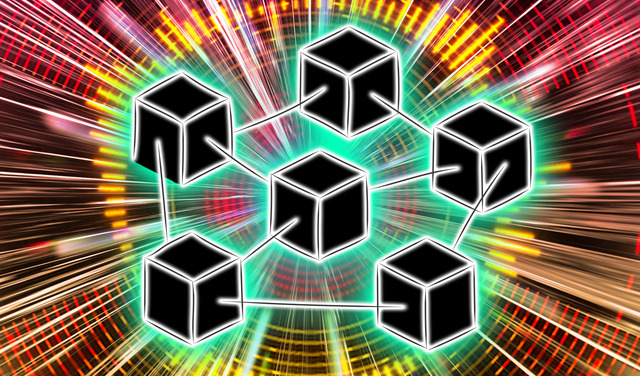
What is Blockchain? The Blockchain is a decentralized network, most commonly used to store cryptocurrency transactions. It works on a peer-to-peer principle, meaning that participants can make transactions without a traditional, central authority. Although initially invented for Bitcoin (BTC), nowadays blockchain is widely used for other cryptocurrencies as well. These currencies are mediums of exchange the same way that the US dollar is, but the difference is that crypto is digital and its adoption is narrower. At least for now. Blockchain records can contain data like copies of documents, transaction data, and more. This means that the potential of blockchain application is far beyond BTC and crypto, and can be used for settling trades, voting, and more.

The Internet of Things (IoT) aims to connect everyday electrical objects with each other in an extensive network to make people’s lives easier and more seamless. However, consumers may wonder why is this important and what are some of the tangible benefits that can be felt today? Stay tuned, read on! Currently, devices dubbed as “smart” are only scratching the surface of what IoT can become. Under this smart category, we currently have refrigerators, TVs, smart locks, etc., for the end consumer, but there are much more devices for industrial and medical use. In essence, smart devices are outfitted with sensors that transmit data to hardware or software components inside a device which are either gathered for further analysis or produce some sort of action from the device aimed at automating certain processes.

IoT is one of those concepts that could have arrived straight from the best science fiction novels. It entails a network of interconnected devices and mechanical and digital machines that have the ability to capture and send data via the internet. It is a major trend that is the driving engine in the evolution of the manufacturing industry, also known as Industry 4.0. Business processes are enhanced by the addition of sensors, devices, and platforms. Gathering all of this data in one place allows businesses to run analyses and what-if scenarios in order to make more informed decisions and design more efficient processes. One of the simpler exemplars of IoT is installing wireless water meters by the water utility company in New York in more than 817,000 buildings. This move allowed the firm to replace the manual task of walking up to water meters in buildings to read numbers and generate customer invoices.

Sony’s latest generation gaming console, the Playstation 5, was highly anticipated, like all the previous releases; however, Playstation 5 promised 4K resolution, variable refresh rates and an amazing new controller at affordable prices. Yet, the console launch was controversial as getting one was challenging, with pre-orders and slow deliveries hampering Sony’s sales and hurting its fan base. Some pre-orders did not even arrive at the intended time, and those that did were disappointed by the lack of truly innovative games that would define the new generation of console gaming. Furthermore, hardware issues cropped up, as gamers on various online forums complained of loud fan noise, the console overheating, and even software glitches in the console itself.

It is a well-known fact that the world of cryptocurrencies is fast-paced, where wealth and bankruptcies can be created, it would seem, in a blink of an eye. In early November 2022, the second largest cryptocurrency exchange, FTX, had roughly a $30 billion valuation; by November 14, it filed for bankruptcy proceedings, pulling with it roughly 100 companies that were directly or indirectly connected to it. FTX is now one of the numerous rags to riches to rags stories in the crypto world, damaging the reputation of crypto and blockchain projects.