Lazy to Read
[the_ad id="5549"]

OpenAI ChatGPT is still storming the web, with new use cases being discovered regularly. In addition to its standardized uses for content creation and coding, it can fly drones and control robots. However, besides new purposes, ChatGPT is also getting new rivals. We already know about Google’s Bard and Microsoft’s Bing, along with their weaknesses and “hallucinations.” But recently, Elon Musk and Mark Zuckerberg, the CEOs of two giant tech companies announced the creation of their own ChatGPT alternatives. What could they be up to?
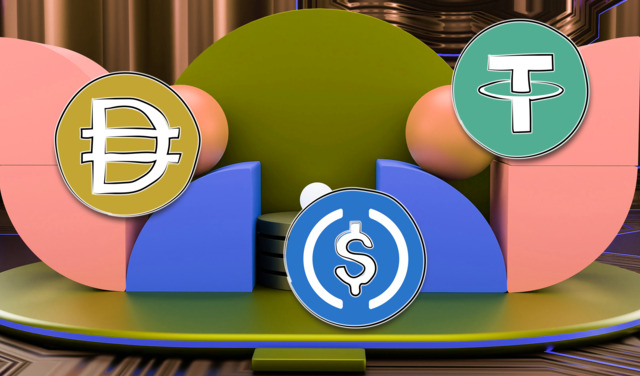
Pegged cryptocurrency describes digital assets whose value is tied to a predetermined fiat currency or a commodity type. Cryptocurrency pegging is initiated to control the value of a cryptocurrency through external factors such as the value of a fiat currency. When a digital asset is too volatile for safe trading, and price fluctuations can’t be tamed through supply and demand, crypto pegging can protect it from extreme volatility.
However, that’s not always a predisposition for crypto pegging. We need stable currency circulating the market to power decentralized systems, and it’s in everyone’s favor to have as many of these digital assets under some control, and that’s one of the reasons we are creating them.
However, that’s not always a predisposition for crypto pegging. We need stable currency circulating the market to power decentralized systems, and it’s in everyone’s favor to have as many of these digital assets under some control, and that’s one of the reasons we are creating them.

Blockchain can benefit entire communities without compromising anyone’s privacy, as proved in the example of the Netherlands. Namely, the project EnergieKnip led by the BlockchainLab Drenthe reached over 106,000 citizens in the Dutch municipality of Emmen, with around 300,000 euros distributed as token rewards. Read on to understand how EnergieKnip became the biggest public government blockchain project in the Netherlands.

China has officially banned ChatGPT due to its potential to “spread false information from the US side”, according to the state media. But this decision has only led to the development of the black market. In addition, China is working hard on launching domestic AI chatbots but its developers are confronted with serious challenges and expectations. Read on to find out more.

While 2022 was not the best year for cryptocurrencies, some tokens stand to benefit more than others, despite the bear market. One such token is Shiba Inu (SHIB), whose current value is far from what it was during its peak in October 2022. It is now preparing for a new upgrade that should make it more popular among crypto investors. Note the token is currently the 15th token according to market cap.
But what is SHIB, and how did it suddenly become so popular? Is it worth investing? Will it have any use cases, and is the hype around it sustainable? Let’s find out!
But what is SHIB, and how did it suddenly become so popular? Is it worth investing? Will it have any use cases, and is the hype around it sustainable? Let’s find out!

The currency exchange rate dictates the value at which two currencies can be exchanged. You can see these rates every time you go to an exchange to buy foreign currency: one dollar equals 0.95 euro, 1.63 Canadian dollars, or 111.05 Serbian dinars, and so on. So, we could also say that these numbers dictate how much of your domestic currency you need to provide to buy a specific amount of foreign money.
Currency peg refers to the policy utilized by central banks or governments to maintain a fixed exchange rate for another country’s currency. In other words, a currency peg is when an authorized body ties currency accepted as legal tender to a foreign fiat currency in hopes of stabilizing the exchange rate policy between the two parties, in this case – the two (occasionally more) countries, involved.
Yet not all currencies are pegged currencies. As a matter of fact, most governments employ a free-floating exchange rate system, which is the complete opposite of a currency peg. One of the primary differences between the two is that a free-floating exchange rate system allows governments to bypass central banks as bodies of influence over exchange rates. As a result, the market’s supply and demand dictate the value differences between local and foreign currencies, keeping them in check.
Currency peg refers to the policy utilized by central banks or governments to maintain a fixed exchange rate for another country’s currency. In other words, a currency peg is when an authorized body ties currency accepted as legal tender to a foreign fiat currency in hopes of stabilizing the exchange rate policy between the two parties, in this case – the two (occasionally more) countries, involved.
Yet not all currencies are pegged currencies. As a matter of fact, most governments employ a free-floating exchange rate system, which is the complete opposite of a currency peg. One of the primary differences between the two is that a free-floating exchange rate system allows governments to bypass central banks as bodies of influence over exchange rates. As a result, the market’s supply and demand dictate the value differences between local and foreign currencies, keeping them in check.

The utilization of robotics in the medical field is rapidly expanding, revolutionizing the way surgical and other medical procedures are performed. Presently, robotics is aiding physicians and surgeons with a broad spectrum of activities, ranging from intricate procedures to remote surgeries, due to advancements in technology. Furthermore, the integration of robotics has enhanced patient outcomes by reducing the likelihood of human error and facilitating more precise and effective procedures.

Having started as a Proof of Work consensus mechanism, Ethereum has been planning to move to Proof of Stake since 2015. Among many reasons, reducing electricity consumption and carbon footprint was one of the most important ones. Finally, in September 2022 the Merge happened and the newest data showed fascinating results – the energy use was cut down by 99.98%.

Santiment, the on-chain analytics platform, shared on Twitter that the number of Bitcoin (BTC) addresses that hold 1000 BTC (whales) is decreasing. At the moment, there are 2,011 such addresses compared to 2,266 that existed just a year ago. Having whales accumulate a token is usually followed by a price increase. This current trend of whales “dumping” BTC could put more pressure on the price of the world’s leading cryptocurrency.

Crypto yield farming is a carefully set up system allowing crypto holders to deposit their crypto into a pool for investment purposes. In other words, it’s an investment strategy of lending or staking your holdings into a liquidity pool through DeFi, hoping to reap the additional benefits of your investment.
Liquidity pools gather deposits from various users, who essentially borrow their money on a DeFi platform and earn interest or more crypto in return for their investment. Once borrowed, users’ crypto ends up locked into a decentralized app (dApp) for token rewards. That could be anything from a crypto wallet to a decentralized exchange.
In most cases, crypto holders rely on the decentralized exchange to borrow, stake, or lend the coins that will, in return, allow them to earn interest on that deposited or borrowed sum.
Liquidity pools gather deposits from various users, who essentially borrow their money on a DeFi platform and earn interest or more crypto in return for their investment. Once borrowed, users’ crypto ends up locked into a decentralized app (dApp) for token rewards. That could be anything from a crypto wallet to a decentralized exchange.
In most cases, crypto holders rely on the decentralized exchange to borrow, stake, or lend the coins that will, in return, allow them to earn interest on that deposited or borrowed sum.
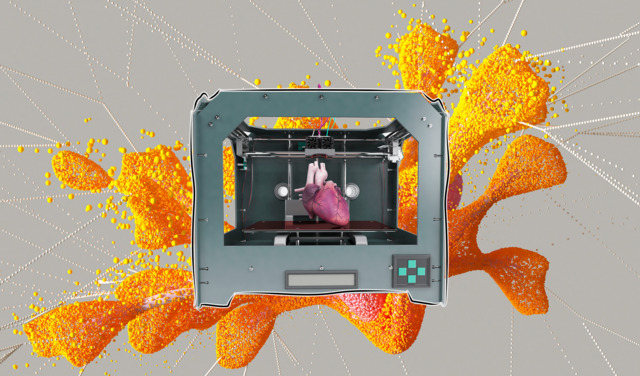
3D bioprinting is not so novel. This technology has a vital role in regenerative medicine and drug testing, as well as in treating various medical conditions. Recently, the potential of 3D bioprinting has been extended owing to the work of scientists from the University of New South Wales in Sydney, Australia. The engineers have constructed a soft robotic arm capable of 3D printing directly on organs and tissues inside the human body. What does this mean for medicine?

According to OpenAI’s blog post, the company invests in engineering and research to reduce biases, both obvious and subtle ones. The company also states that ChatGPT has its quirks, as it sometimes refuses to give an unrestricted output or does the opposite and provides an output when it shouldn’t. Part of these investments will certainly go into improving these “faults” in ChatGPT’s behavior.
On top of that, OpenAi understood that user demand varies on an individual level and therefore announced a customizable ChatGPT. This would essentially allow ChatGPT to produce outputs that others may disagree with.
On top of that, OpenAi understood that user demand varies on an individual level and therefore announced a customizable ChatGPT. This would essentially allow ChatGPT to produce outputs that others may disagree with.