Brzi Pregled


It was always challenging for ambitious yet risky projects to get funded. But, compared to startups – public goods projects, non-profits, and FOSS (Free and open-source software) don’t have the possibility of an ‘exit’. These types of projects are in desperate need of a business model. And that’s precisely what Ethereum co-founder Vitalik Buterin has provided. Want to know how these fantastic projects can have sustainable financing in the future? Read on to find out.

There’s a widespread belief that Web 3.0 is only for the privileged few. But little did they know – it can be used to revolutionize philanthropy as we know it. Significant milestones were already made. For example, it will only take you $7 USD to fund a menstrual cup for a woman in Africa that can last up to 7 years. The best part is that donation goes directly to her without additional taxes or hidden fees. It’s as simple as that.

According to recent forecasts, Web 3.0’s value is in making the internet more interactive, humane, and beneficial to all sides involved. Data from Market Research Future (MRF) shows that the overall worth of the Web 3.0 blockchain market will peak at $6 billion in 2023, while by the end of the decade, it’s expected to reach an astonishing $82 billion.

Starting July 1, 2023, Universal Analytics as we know (and love) will no longer exist. Instead, the official website’s tracking statistics service will be Google Analytics 4. The news has worried a number of marketers around the world, but this change is not necessarily bad. Starting July 1, 2023, Universal Analytics as we know (and love) will no longer exist. Instead, the official website’s tracking statistics service will be Google Analytics 4. The news has worried a number of marketers around the world, but this change is not necessarily bad. Starting July 1, 2023, Universal Analytics as we know (and love) will no longer exist. Instead, the official website’s tracking statistics service will be Google Analytics 4. The news has worried a number of marketers around the world, but this change is not necessarily bad.
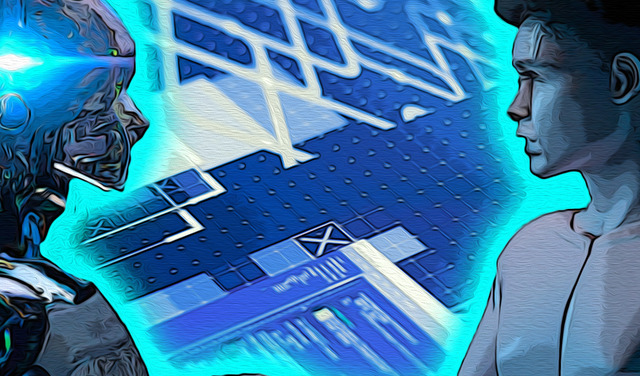
Undoubtedly, AI hiring tools require significant improvement. Not only do they fail to exhibit fairness in the hiring process, but they also lack the emotional and mental capacity that results in a diversified workforce.
-These tools can’t be trained to only identify job-related characteristics and strip out gender and race from the hiring process, because the kinds of attributes we think are essential for being a good employee are inherently bound up with gender and race.- University of Cambridge’s Centre for Gender Studies post-doctoral researcher Dr. Kerry Mackereth said in an interview for BBC News.
Keeping humans at the heart of recruitment is the only viable solution for fighting AI bias. Of course, AI hiring tools can help talent scouts cut work time in half, but they should continuously be monitored to ensure fair play and inclusion.
-These tools can’t be trained to only identify job-related characteristics and strip out gender and race from the hiring process, because the kinds of attributes we think are essential for being a good employee are inherently bound up with gender and race.- University of Cambridge’s Centre for Gender Studies post-doctoral researcher Dr. Kerry Mackereth said in an interview for BBC News.
Keeping humans at the heart of recruitment is the only viable solution for fighting AI bias. Of course, AI hiring tools can help talent scouts cut work time in half, but they should continuously be monitored to ensure fair play and inclusion.

“Section 230” is a part of the law that ensures the freedom of speech in online spaces and immunity for platforms that don’t have control over what users post in these online communities. However, 26 years after its implementation, the effectiveness of “Section 230” is about to be challenged by the US Supreme Court.
As “Section 230” was established before social media’s development, it is natural to question its necessity. After many online incidents that resulted in users’ harm, it’s time for the Court to finalize its decision. The decision regarding “Section 230” will revolutionize and affect platforms through which half of our planet scrolls daily and the internet as we know it.
But why is “Section 230” crucial, and how can the outcome of the Court’s decision affect our future?
Stay tuned to find out!
As “Section 230” was established before social media’s development, it is natural to question its necessity. After many online incidents that resulted in users’ harm, it’s time for the Court to finalize its decision. The decision regarding “Section 230” will revolutionize and affect platforms through which half of our planet scrolls daily and the internet as we know it.
But why is “Section 230” crucial, and how can the outcome of the Court’s decision affect our future?
Stay tuned to find out!
All articles loaded
No more articles to load